Easy Japchae Korean Glass Noodle Stir Fry Recipe
Japchae (Korean Glass Noodle Stir Fry) is more than just a dish; it’s a vibrant celebration on a plate, a symphony of textures and flavors that instantly transports me to the heart of Korean cuisine. If you’ve ever found yourself utterly captivated by its shimmering, translucent noodles and the colorful medley of vegetables and protein, you’re not alone. What is it about this beloved Korean stir-fry that makes it so universally adored? It’s the perfect balance: the delightful chegrape juicess of the sweet potato starch noodles, the subtle sweetness of the soy-based sauce, and the satisfying crunch of fresh vegetables. Each bite of Japchae offers a unique experience, making it a star at any gathering or a comforting meal on a quiet evening. Its versatility is another key ingredient in its charm, allowing for endless customization. Let’s dive in and create our own delicious Japchae!
Why You’ll Love This Japchae Recipe
What Makes Japchae So Special
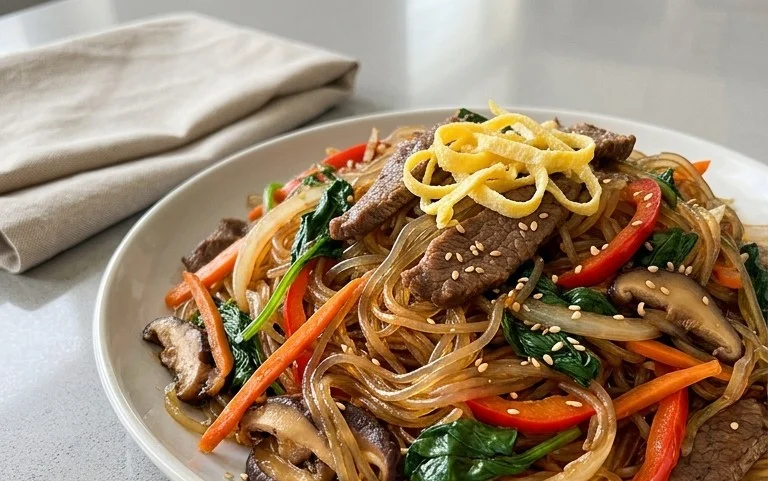
Japchae (Korean Glass Noodle Stir Fry)
Japchae is a quintessential Korean dish, a vibrant and flavorful stir-fry that balances savory, sweet, and umami notes with a delightful chewy texture. Traditionally served on special occasions like holidays and birthdays, it’s also a popular everyday meal that’s surprisingly approachable to make at home. The star of the show is the translucent sweet potato glass noodles, which absorb the delicious sauce beautifully, while a medley of colorful vegetables and tender beef adds depth and complexity. Get ready to create a showstopper that will impress your friends and family, or simply treat yourself to a truly satisfying meal.
Ingredients:
Cooking Instructions:
Preparing the Components
The key to a successful Japchae is to prepare all your ingredients before you start stir-frying. This dish comes together quickly once you start cooking, so having everything ready to go is crucial.
1. Cook the Glass Noodles: Begin extract by cooking the sweet potato glass noodles according to the package instructions. This usually involves boiling them in water for about 6-10 minutes until they are tender and translucent with a pleasant chew. Once cooked, drain them thoroughly and rinse them under cold water to prevent them from sticking together. To make them easier to handle and absorb the sauce, toss the drained noodles with a tablespoon of toasted sesame oil and a pinch of salt. Set aside.
2. Marinate the Beef: While the noodles are cooking, prepare your beef. If you haven’t already, slice your chosen cut of beef into thin, bite-sized strips. In a medium bowl, combine the beef strips with 1 tablespoon of soy sauce, 1 teaspoon of toasted sesame oil, a pinch of black pepper, and a pinch of salt. Mix well to ensure the beef is evenly coated. Let it marinate for at least 10-15 minutes while you prepare the vegetables. This step adds a wonderful depth of flavor to the beef.
3. Prepare the Sauce: In a small bowl, whisk together the soy sauce, honey, brown sugar, and the remaining toasted sesame oil. This is your flavor powerhouse for the entire dish. Taste and adjust the sweetness or saltiness to your preference. The balance of sweet and savory is what makes Japchae so addictive!
Stir-Frying the Vegetables and Beef
Now comes the fun part, where all the individual components come together in a flavorful symphony.
4. Cook the Egg Crepes: Heat a lightly oiled non-stick skillet over medium heat. Pour in half of the beaten eggs, swirling the pan to create a thin crepe. Cook until set, then gently flip and cook for another 30 seconds. Slide it onto a cutting board and repeat with the remaining egg. Once cooled, stack the crepes and thinly slice them into ribbons. These will be a beautiful garnish and add a lovely delicate texture.
5. Sauté the Vegetables and Beef: Heat about 1-2 tablespoons of oil in a large skillet or wok over medium-high heat. Add the marinated beef and stir-fry until it’s browned and cooked through, about 3-5 minutes. Remove the beef from the skillet and set aside. Add a little more oil if needed, then add the sliced yellow onion and stir-fry for about 2 minutes until it starts to soften and become translucent. Next, add the julienned carrots and sliced mushrooms. Stir-fry for another 3-4 minutes until the vegetables are tender-crisp. You want them to retain a slight bite, not be mushy.
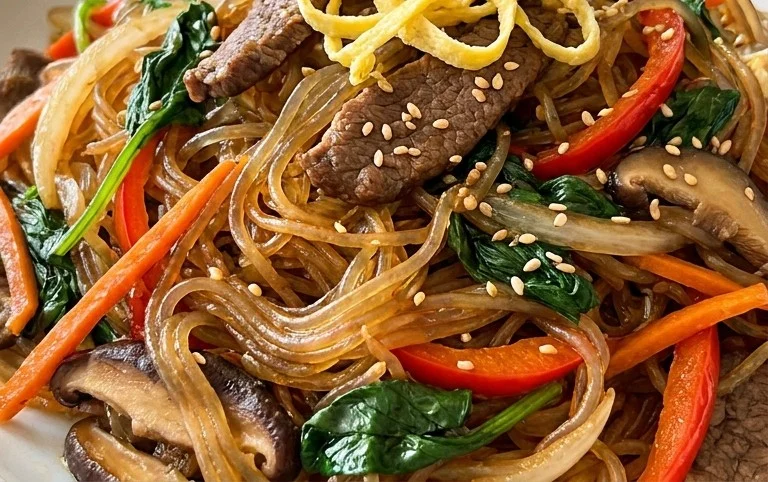
6. Combine and Finish: Add the cooked glass noodles, stir-fried beef, and the baby spinach to the skillet with the vegetables. Pour the prepared sauce over everything. Toss gently but thoroughly, ensuring the noodles and vegetables are evenly coated with the sauce. Cook for another 2-3 minutes, stirring constantly, until the spinach has wilted and everything is heated through. Finally, add the chopped green onions and toss for one last minute. The green onions add a fresh, pungent kick that brightens the whole dish.
Serve your delicious Japchae immediately, garnished with the sliced egg crepes and a sprinkle of toasted sesame seeds if desired. Enjoy this flavorful and satisfying Korean classic!
Conclusion:
And there you have it! Your guide to creating a delicious and authentic Japchae, the beloved Korean glass noodle stir-fry. This dish truly shines with its harmonious blend of textures – the satisfying chegrape juicess of the sweet potato noodles, the crispness of the vegetables, and the tender protein. It’s a wonderfully versatile meal that’s as beautiful to look at as it is enjoyable to eat, making it perfect for weeknight dinners or impressing guests. The beauty of this Japchae recipe lies in its adaptability; feel free to swap out vegetables based on what you have on hand or your personal preferences. I genuinely encourage you to give this Japchae a try – you might just find it becomes a new favorite in your culinary repertoire!
Frequently Asked Questions about Japchae:
What are glass noodles and where can I find them?
Glass noodles, also known as cellophane noodles or sweet potato starch noodles, are made from starch derived from plants like sweet potatoes, mung beans, or tapioca. They have a translucent appearance and a delightfully chewy texture when cooked. You can typically find them in the international aisle of most well-stocked supermarkets, Asian grocery stores, or online retailers.
Can I make Japchae ahead of time?
Yes, you can! Japchae is a great make-ahead dish. Cook the noodles and stir-fry the components separately. Once cooled, store them in airtight containers in the refrigerator. When ready to serve, reheat everything gently in a wok or skillet, adding a splash of soy sauce or a bit of water if needed to rehydrate the noodles. For the best texture, it’s recommended to add the sauce just before serving to prevent the noodles from becoming too soft.
Japchae (Korean Glass Noodle Stir Fry)
A classic Korean dish featuring chewy glass noodles stir-fried with tender beef, colorful vegetables, and a savory-sweet sauce.
Ingredients
-
12 ounces sweet potato glass noodles
-
16 ounces pork (cut into strips (cuts like flank, skirt, ribeye are great))
-
2 large eggs (beaten)
-
1 large carrot (peeled and julienned)
-
1 medium yellow onion (thinly sliced)
-
3 mushrooms (thinly sliced)
-
2 cups baby spinach (packed)
-
2 stalks green onion (cut into 1 inch pieces)
-
oil (for cooking)
-
Toasted sesame seeds (optional for garnish)
-
Salt and black pepper (as needed)
-
7 tablespoons soy sauce (light sodium)
-
3 tablespoons honey
-
2 tablespoons brown sugar
-
2 tablespoons toasted sesame oil
Instructions
-
Step 1
Cook the glass noodles according to package directions. Drain, rinse with cold water, and toss with 1 tablespoon of toasted sesame oil and a pinch of salt and pepper. Set aside. -
Step 2
Marinate the pork strips with 1 tablespoon soy sauce, 1 teaspoon honey, 1 teaspoon brown sugar, and a pinch of salt and pepper for at least 15 minutes. -
Step 3
Heat 1 tablespoon of oil in a large skillet or wok over medium-high heat. Add the marinated pork and stir-fry until cooked through. Remove from skillet and set aside. -
Step 4
In the same skillet, add a little more oil if needed. Stir-fry the julienned carrots and sliced onions until tender-crisp. Add the sliced mushrooms and cook for another 2-3 minutes. -
Step 5
Add the cooked glass noodles, stir-fried pork, and baby spinach to the skillet. Stir-fry gently until the spinach is wilted. -
Step 6
In a small bowl, whisk together the remaining soy sauce, honey, brown sugar, and toasted sesame oil. Pour this sauce over the noodles and vegetables. Stir well to coat everything evenly. -
Step 7
Add the green onion pieces and stir-fry for another minute. Taste and adjust seasoning with salt and pepper if necessary. Serve immediately, garnished with toasted sesame seeds if desired.
Important Information
Nutrition Facts (Per Serving)
It is important to consider this information as approximate and not to use it as definitive health advice.
Allergy Information
Please check ingredients for potential allergens and consult a health professional if in doubt.